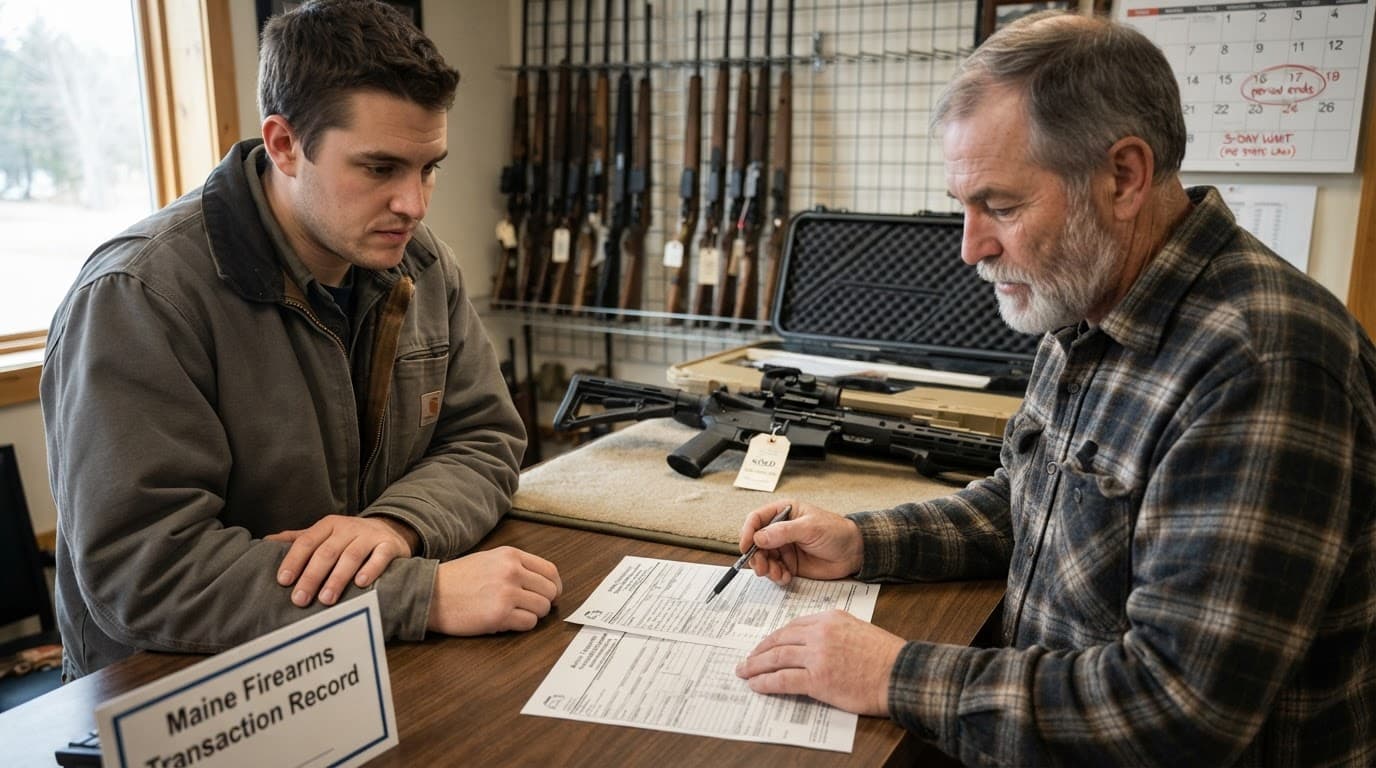
Look, I run a gun shop. I've seen firsthand how these waiting period laws play out in real life — and it's not pretty.
The Second Amendment Foundation and NRA just asked the Supreme Court to take up Beckwith v. Frey, Maine's 72-hour waiting period that kicks in even AFTER a buyer passes their background check. That's right — you could clear NICS instantly and still walk out empty-handed while the state makes you wait three days before you can take home a firearm you already paid for.
Here's the story that should make every Maine resident angry: A woman being stalked went to buy a gun for home defense after police told her to. She passed her background check immediately. She paid. She arranged training. But because Maine forces dealers to hold firearms for 72 hours — and the store was closed Sunday and Monday — she couldn't pick up her defensive weapon until Tuesday. Four days of waiting while she's being stalked. That's the "cooling-off" period in action.
The First Circuit upheld this mess by claiming Maine's waiting period doesn't directly regulate Second Amendment conduct because it's just a "condition on the commercial sale." That's nonsense. If the government can stop you from taking possession of a firearm you've already legally purchased, they've effectively regulated your right to keep and bear arms. Bruen was supposed to end this kind of judicial gamesmanship.
What really gets me is Maine never had to justify this with historical tradition. The Tenth Circuit in Ortega v. Grisham already struck down New Mexico's seven-day wait because the state couldn't show historical support. But the First Circuit just waved Maine through without requiring any historical analysis at all.
The SAF-NRA brief makes a great point: yes, historically there were travel times and mail-order delays. But that's not the same as the government mandating a local dealer hold a firearm that's already in stock and ready to go. Those aren't equivalent, and courts shouldn't pretend they are.
If the Supreme Court takes this case, they could finally make clear what should be obvious: your Second Amendment right doesn't start three days after the government says it's convenient. A right that expires on the state's schedule isn't a right at all — it's a privilege the government grants and revokes at will.
Colorado's waiting period is also being challenged, and we've seen how these delays can close real windows for buyers when new restrictions kick in. This case matters far beyond Maine.